Hario V60 Review: Best Pour-Over Starter Dripper?
Pros
- Excellent clarity with light and medium roasts
- Affordable entry into serious pour-over coffee
- Available in 01, 02, and 03 sizes
- Easy to clean with no moving parts
- Many material and color options
Cons
- Less forgiving than flat-bottom brewers
- Needs correct grind size and pouring technique
- Paper filter size can be confusing at first
- Ceramic version needs thorough preheating
This Hario V60 review is for people deciding whether a simple cone dripper is the right way to brew cleaner, more controlled pour-over coffee at home. This Hario V60 review is based on daily cups with the 02 size, side-by-side brews with a flat-bottom dripper, and a few intentionally bad grind and pouring experiments to see how forgiving it really is.
The short version of this Hario V60 review: the V60 is still one of the best manual coffee drippers you can buy if you enjoy controlling the brew. It is inexpensive, easy to clean, available in several sizes and materials, and capable of very clean, bright coffee. It is also less forgiving than a Kalita Wave or basic automatic drip brewer, so beginners need to be willing to learn a little technique.
Hario V60 Review: Quick Verdict
The Hario V60 is worth buying if you want a pour-over dripper that can grow with your technique. It rewards small improvements in grind size, water temperature, pouring speed, and recipe consistency. When everything is dialed in, the cup is clean, aromatic, and more transparent than what I usually get from a flat-bottom dripper.
It is not the easiest brewer for someone who wants the same cup every morning with no thought. The large single hole drains quickly, and that means your grind and pour matter. If you rush, pour unevenly, or grind too coarse, the coffee can taste thin. If you grind too fine or pour too aggressively, bitterness shows up fast.
| Category | Rating |
|---|---|
| Brew Quality | 4.5 / 5 |
| Ease of Use | 4.0 / 5 |
| Build Quality | 4.5 / 5 |
| Value | 5.0 / 5 |
| Beginner Friendliness | 3.5 / 5 |
| Overall | 4.4 / 5 |
Design and Build Quality
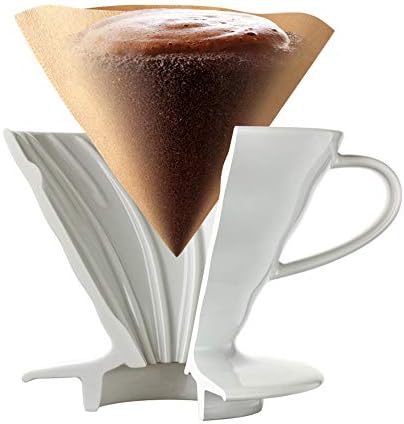
The V60 looks almost too simple: a cone, spiral ribs, and one large hole at the bottom. That simplicity is the point. The cone shape pushes the coffee bed toward the center, the spiral ribs create airflow between the paper filter and the dripper wall, and the large opening gives you more control over flow rate than a brewer with several small holes.
In daily use, the design feels practical rather than fragile. One thing I kept noticing during this Hario V60 review is how little there is to fail: the plastic version is light and hard to break, while the ceramic version feels nicer on the counter and holds heat better if you preheat it properly. The glass version looks beautiful but needs more care. The metal version is travel-friendly, though I still prefer plastic or ceramic at home.
Hario V60 01 vs 02: Which Size Should You Buy?
For most people, the Hario V60 02 is the right size. It comfortably handles one large mug or two smaller cups, and it gives you enough room to pour without feeling cramped. If you are only buying one V60, I would buy the 02 first.
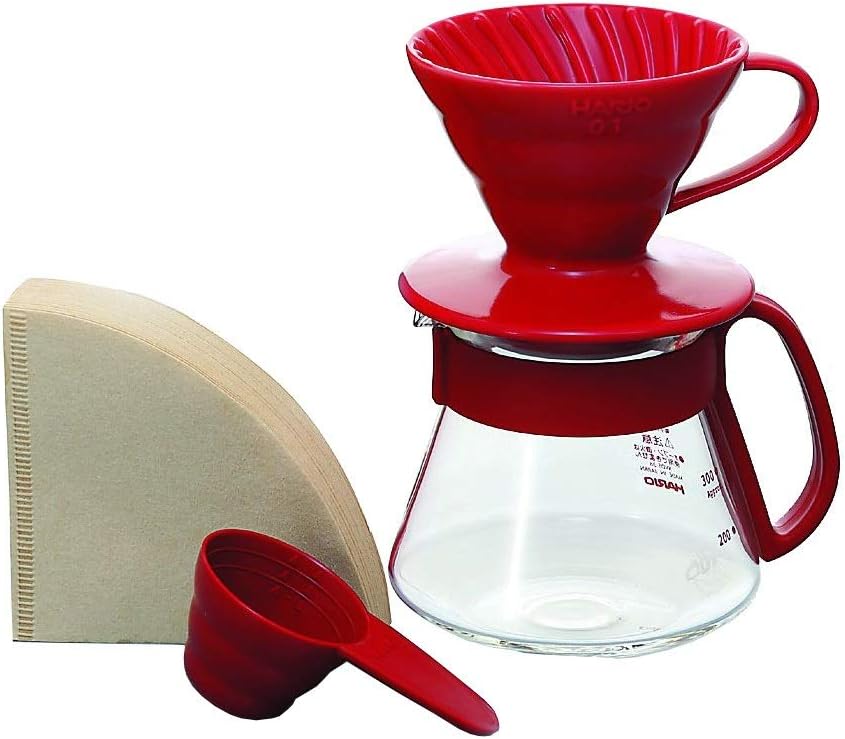
The Hario V60 01 makes sense if you brew small single cups, travel often, or want a compact setup for a desk or tiny kitchen. I like the 01 for 12 to 15 gram doses, but it feels limiting once I brew 20 grams or more. The 03 size is for larger batches and is less useful for my normal morning routine.
Ceramic, Plastic, Glass, or Metal: Which V60 Material Is Best?
If I were buying again for everyday coffee, I would choose the plastic Hario V60 02. It is cheap, light, durable, and does not steal as much heat from the slurry as cold ceramic can. It is also the easiest version to recommend to beginners because there is less preheating fuss.
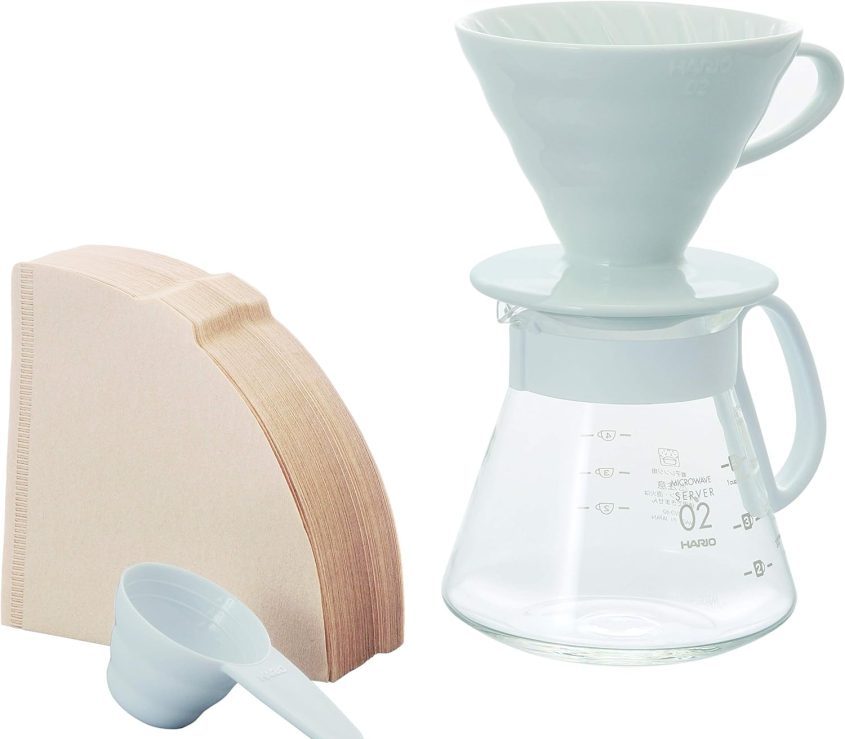
The ceramic Hario V60 dripper feels more premium and looks better on a kitchen counter. I like it when I take the time to preheat it with plenty of hot water. Without preheating, it can pull heat out of the brew and make light roasts taste flatter than they should. Glass is attractive but more fragile. Metal is durable, but I do not think it improves the cup enough to be my first choice.
| Material | Best For | Main Trade-Off |
|---|---|---|
| Plastic | Most beginners and daily users | Less premium feel |
| Ceramic | Home brewers who like a heavier dripper | Needs careful preheating |
| Glass | People who want the cleanest look | More fragile |
| Metal | Travel or rough handling | Less classic V60 feel |
Brew Performance
The V60 is fast, responsive, and honest. For this Hario V60 review, I used a medium-fine grind, 20 grams of coffee, 320 grams of water, and a simple three-pour recipe for most testing. With fresh beans and a good grinder, drawdown landed around 2:30 to 3:15. The best cups were bright, sweet, and clean, especially with washed Ethiopian and Colombian coffees.
The brewer reacts quickly to small changes. A slightly finer grind adds body but can bring bitterness. A faster pour increases agitation and extraction. A slow center pour can make the cup more delicate but sometimes thin. This is why the V60 has stayed popular with coffee people: it gives you real control.
That control cuts both ways. Compared with a flat-bottom brewer, the V60 is easier to mess up. If your grinder produces too many fines, the cone can clog. If you pour too aggressively against the paper wall, bypass becomes more likely. If you do not rinse the paper filter, the first few sips can taste papery.
Taste: What Kind of Coffee Does the V60 Make?
One takeaway from this Hario V60 review is that the brewer is best at clean, bright, high-clarity coffee. Light and medium roasts shine here. Fruit notes are easier to separate, acidity feels sharper, and the finish is usually cleaner than what I get from a thicker-filter brewer like Chemex.
If you want a heavy, syrupy cup, the V60 may not be your first choice. You can push the recipe finer and slower to increase body, but the brewer’s personality leans toward clarity. That is exactly why I like it for single-origin coffee and less for dark roasts that I want to feel round and chocolatey.
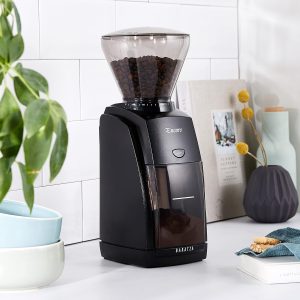
The best improvement I made during testing was not a new recipe. It was using a better grinder. When I paired the V60 with the Fellow Ode Gen 2, the cup became cleaner and more repeatable. A cheap blade grinder would waste what the V60 does well.
Daily Use: Filters, Cleaning, and Workflow
After weeks of testing for this Hario V60 review, I found the daily workflow easy once the routine is set. Put in a Hario V60 filter, rinse it, add coffee, bloom, pour, toss the paper, rinse the dripper. There are no parts to disassemble and no hidden places for old coffee oils to collect.
Filters matter. The 01 and 02 use different paper sizes, so buy the correct Hario V60 filters for your dripper. I prefer the tabbed Hario papers for convenience, but any properly sized V60 filter works. If you are buying a kit, make sure it includes the right filter size and not just the dripper.
I would not overbuy accessories at first. A V60 dripper, filters, a kettle, a scale, and a decent grinder are enough. A gooseneck kettle helps a lot because pouring control is part of the V60 experience, but the dripper itself is still the cheapest part of the setup.
Who Should Buy the Hario V60?
- Buy it if you want clean, bright pour-over coffee.
- Buy it if you enjoy adjusting grind size, pouring style, and recipes.
- Buy the 02 size if you usually brew one large mug or two small cups.
- Buy the plastic version if you want the most practical daily dripper.
- Buy it if you already have a decent burr grinder or plan to get one.
The V60 also makes sense as a second brewer if you already own an automatic drip machine. I still like the consistency of a brewer such as the Technivorm Moccamaster on busy mornings, but the V60 gives me more control when I want to slow down and brew one better cup.
Who Should Skip It?
- Skip it if you want the easiest possible manual brewer.
- Skip it if you do not want to use a scale or pay attention to grind size.
- Skip it if you mostly brew large batches for several people.
- Skip it if you prefer a heavier, rounder cup over clarity.
For absolute beginners who want more forgiveness, a flat-bottom dripper can be easier. The V60 is not difficult, but it is less automatic than it looks. It asks you to participate.
Hario V60 vs Kalita Wave vs Chemex
| Brewer | Best For | Cup Style | Forgiveness |
|---|---|---|---|
| Hario V60 | Control and clarity | Bright, clean, transparent | Medium |
| Kalita Wave | Consistency | Balanced, sweet, steady | High |
| Chemex | Larger batches and clean presentation | Very clean, lighter body | Medium |
Compared with Kalita Wave, the Hario V60 gives you more control but less built-in stability. The Kalita’s flat bottom and smaller drain holes help even out mistakes. Compared with Chemex, the V60 is more compact, faster, and better for one-cup brewing. Chemex is nicer for serving several people and has a very clean flavor from its thicker papers.
Pros and Cons
| Pros | Cons |
|---|---|
| Excellent clarity with light and medium roasts | Less forgiving than flat-bottom brewers |
| Affordable entry into serious pour-over coffee | Needs correct grind size and pouring technique |
| Available in 01, 02, and 03 sizes | Paper filter size can be confusing at first |
| Easy to clean with no moving parts | Ceramic version needs thorough preheating |
| Many material and color options |
Final Verdict
After this Hario V60 review, my recommendation is simple: buy the V60 02 if you want a manual pour-over dripper that is affordable, capable, and worth learning. Choose plastic for practicality, ceramic for counter appeal, and 01 only if you brew small cups most of the time.
The V60 is not magic. It will not fix stale beans or a bad grinder. But with fresh coffee, a decent burr grinder, and a little patience, it makes cups that are clean, expressive, and genuinely satisfying. That is the main takeaway from my Hario V60 review, and it is why this is still one of the first drippers I recommend.
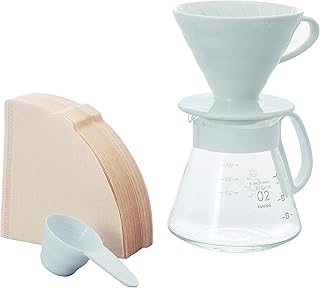
At $34.45, the Hario V60 02 is an easy recommendation if you want to get serious about pour-over without spending much on the brewer itself. Check the latest price of the Hario V60 on Amazon. For official product details and kit specifications, check the Hario V60 Coffee Pour Over 02 Ceramic Kit page.
Ready to Buy the Hario V60 Review: Best Pour-Over Starter Dripper??
Check the latest price and availability at our trusted retailer.
Check Price on AmazonAs an affiliate, we earn from qualifying purchases. This does not affect the price you pay.