Best Beginner Espresso Machine: 4 Smart Picks
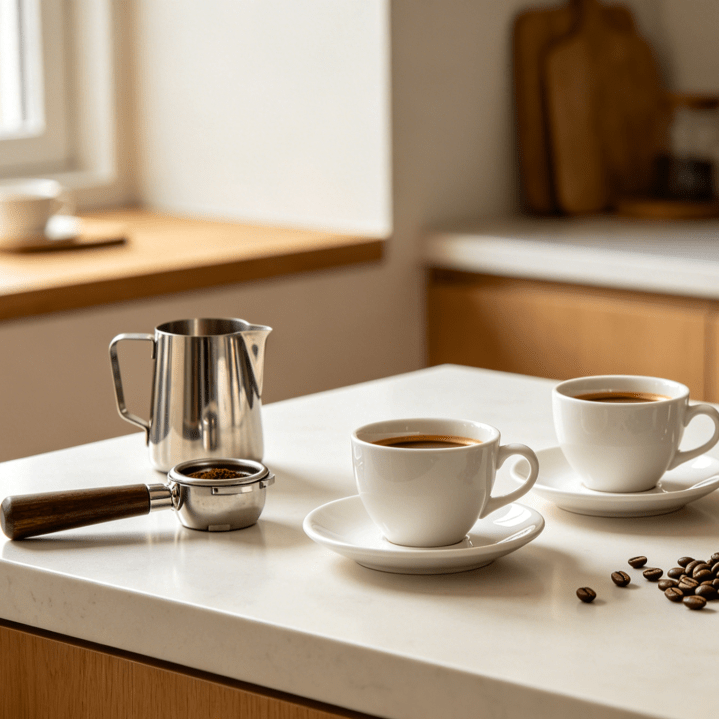
The best beginner espresso machine is not always the most powerful machine under $1,000. For a first home setup, the better question is simpler: which machine helps you make good drinks repeatedly before you have perfect puck prep, grinder settings, and milk steaming technique?
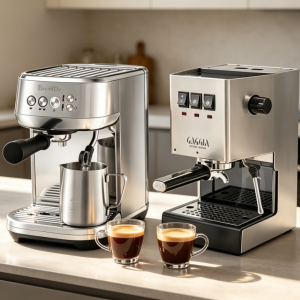
For most beginners, I would start with the Breville Bambino Plus. It heats quickly, keeps the workflow simple, and removes the hardest milk-steaming step with its automatic steam wand. If you want a more hands-on machine that can grow with you, the Gaggia Classic Pro E24 is the better hobbyist pick. If you want one box with a built-in grinder, the Breville Barista Express Impress is convenient, but the grinder is the compromise. In other words, the best beginner espresso machine is the one that fits your daily tolerance for practice.
This page focuses on beginner espresso decisions, not just price. Every pick here is commonly considered below the $1,000 mark, but prices move often. Confirm current pricing before publishing or adding retailer-specific claims.
Best Beginner Espresso Machine: Quick Picks
| Buyer Type | Pick | Why |
|---|---|---|
| Most beginners | Breville Bambino Plus | Fast heat-up, easy workflow, strong automatic milk texture |
| Hands-on learners | Gaggia Classic Pro E24 | 58mm portafilter, brass boiler, and a real upgrade path |
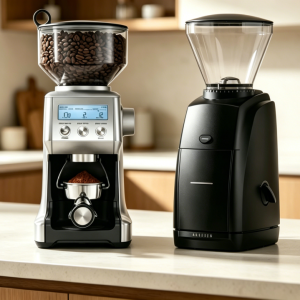
| All-in-one buyers | Breville Barista Express Impress | Built-in grinder and assisted tamping in one machine |
| Manual purists | Rancilio Silvia | Durable build and strong espresso ceiling, but steeper learning curve |
How to Choose Your First Espresso Machine
A beginner machine has to solve three problems at once: heat stability, milk steaming, and repeatable workflow. A machine can have impressive specs and still be a poor first choice if it punishes every small mistake.
- Choose convenience if you mainly want cappuccinos and lattes before work.
- Choose control if you enjoy learning technique and upgrading accessories.
- Choose all-in-one only if counter space matters more than grinder flexibility.
- Budget for the grinder because espresso quality depends heavily on grind control.
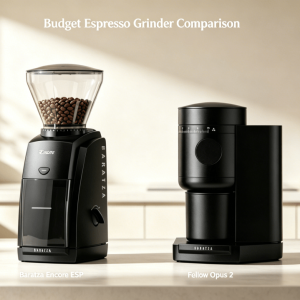
If you do not already own a grinder, read the best espresso grinder under 300 guide before spending the full budget on the machine.
Best Overall for Beginners: Breville Bambino Plus
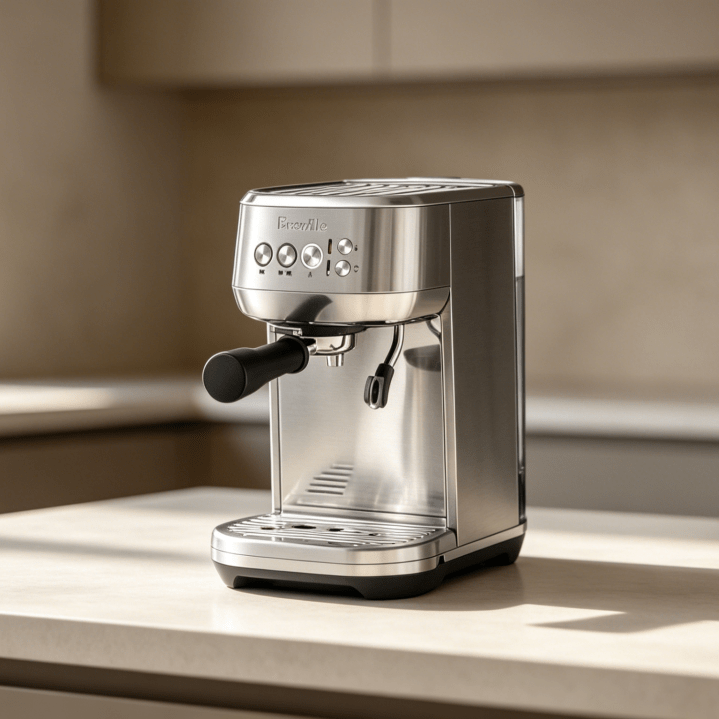
The Breville Bambino Plus is the best beginner espresso machine for most people because it removes friction. It heats up quickly, fits small kitchens, and makes milk drinks less intimidating. The automatic steam wand is the main reason I recommend it to households where not everyone wants to learn manual steaming.
The tradeoff is upgrade ceiling. The 54mm portafilter limits accessories compared with 58mm machines, and the lightweight build does not feel as serious as a Gaggia or Rancilio. But for a beginner who wants good drinks with less frustration, those compromises are reasonable.
Read the full Breville Bambino Plus review for a deeper look at espresso quality, milk texture, and daily workflow.
| Strength | Tradeoff |
|---|---|
| Very fast heat-up | Less traditional espresso workflow |
| Excellent automatic milk steaming | 54mm accessory ecosystem |
| Compact and beginner-friendly | Lower upgrade ceiling than 58mm machines |
Best Hobbyist Pick: Gaggia Classic Pro E24
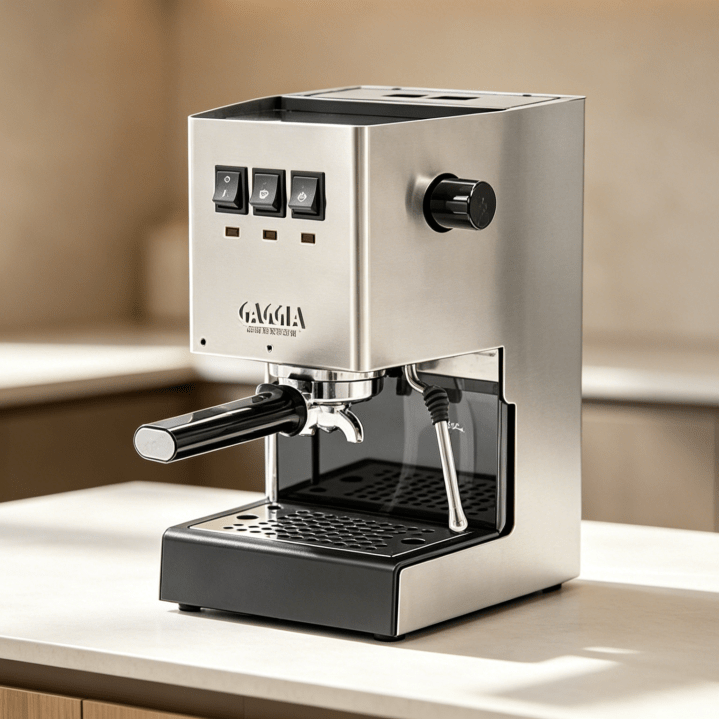
The Gaggia Classic Pro E24 is the machine I would choose for a beginner who wants to become an espresso hobbyist. The 58mm portafilter, brass boiler, mechanical switches, and wide accessory support make it feel closer to traditional espresso equipment.
It is not as forgiving as the Bambino Plus. You need warm-up time, manual steaming practice, and more attention to puck prep. But if you want a machine that rewards technique, the Gaggia makes more sense than a push-button appliance.
For the single-machine view, see the Gaggia Classic Pro E24 review. For the direct decision between these two, read Bambino Plus vs Gaggia Classic E24.
Best All-in-One: Breville Barista Express Impress
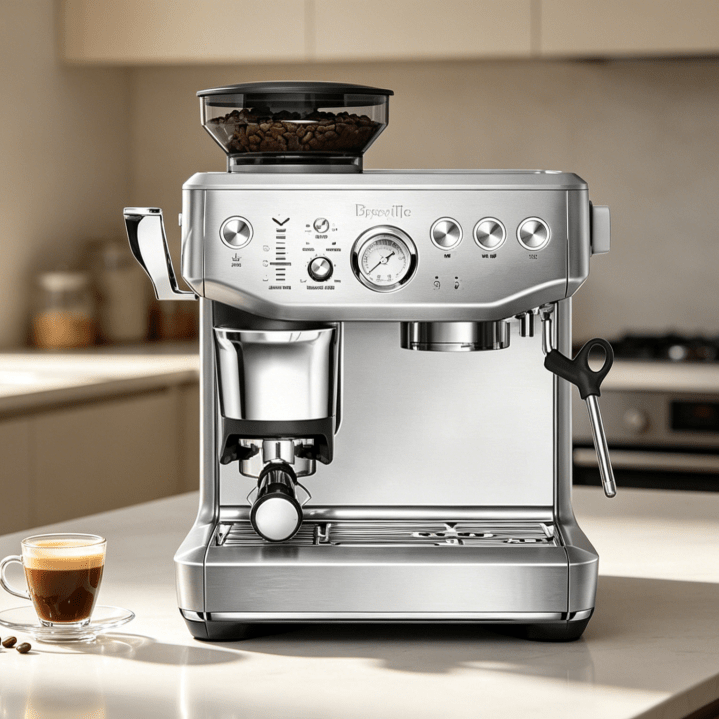
The Breville Barista Express Impress is the easiest way to buy a machine and grinder in one box. Assisted tamping and built-in dosing help reduce beginner mistakes, and the workflow is less scattered than buying separate tools on day one.
The downside is the built-in grinder. It is convenient, but it does not give you the same upgrade path as a separate espresso grinder. If you expect to get deeper into espresso, a Bambino Plus plus a dedicated grinder may age better than an all-in-one machine.
See the Breville espresso machine review for more detail on the Barista Express Impress workflow.
Best Manual Build: Rancilio Silvia
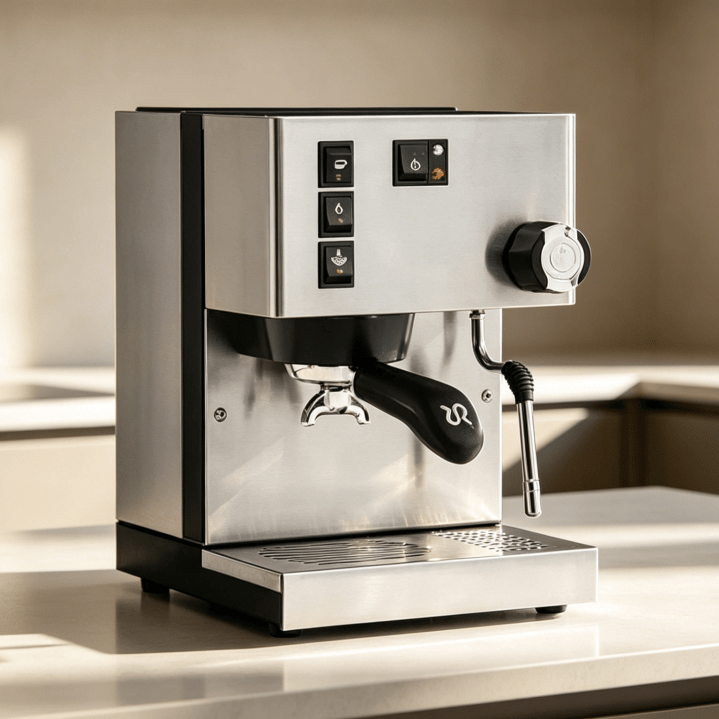
The Rancilio Silvia is not the easiest beginner machine, but it deserves a place because some beginners want durability and manual control from the start. It has a stronger traditional espresso feel than the Bambino Plus and a more serious build than most appliance-style machines.
The problem is the learning curve. Without PID control on the base model, you need to manage temperature more carefully. The machine also works best when paired with a capable grinder and a patient user. If that sounds exciting rather than annoying, read the Rancilio Silvia review.
Comparison Table
| Machine | Best For | Beginner Ease | Upgrade Path | Main Warning |
|---|---|---|---|---|
| Breville Bambino Plus | Most beginners | Excellent | Moderate | 54mm ecosystem and lighter build |
| Gaggia Classic Pro E24 | Hands-on learners | Moderate | Excellent | Requires warm-up and technique |
| Barista Express Impress | All-in-one buyers | Very good | Limited by built-in grinder | Grinder may become the bottleneck |
| Rancilio Silvia | Manual purists | Low to moderate | Good | Steeper learning curve |
Which One Should You Buy?
Buy the Breville Bambino Plus if you want the safest first machine for milk drinks, small kitchens, and low-friction mornings.
Buy the Gaggia Classic Pro E24 if you want to learn espresso technique and build a setup around a 58mm platform.
Buy the Barista Express Impress if you want one purchase and one workflow, and you accept that the grinder may be the first thing you outgrow.
Buy the Rancilio Silvia if you value durability and manual control more than beginner convenience.
Who Should Skip These Machines?
Skip the Bambino Plus if you want a traditional 58mm platform from day one. Skip the Gaggia Classic Pro E24 if you do not want warm-up time, manual steaming practice, or accessory decisions. Skip the Barista Express Impress if you expect the built-in grinder to match a dedicated espresso grinder. Skip the Rancilio Silvia if you want a forgiving first-week experience instead of a machine that demands patience.
Verdict
The best beginner espresso machine for most people is the Breville Bambino Plus because it gives beginners the highest chance of making good drinks quickly. The Gaggia Classic Pro E24 is the better long-term learning platform, while the Barista Express Impress is the convenience pick for buyers who want an all-in-one setup. If you are choosing your first setup today, treat the best beginner espresso machine as a workflow choice before treating it as a spec sheet.
Do not spend your entire budget on the machine and ignore the grinder. A modest espresso machine with a good grinder usually beats an expensive machine with a poor grinder. If your budget is tight, choose the machine that fits your daily workflow, then leave room for a grinder, scale, and fresh beans.