Best Electric Grinder for Espresso: 7 Checks
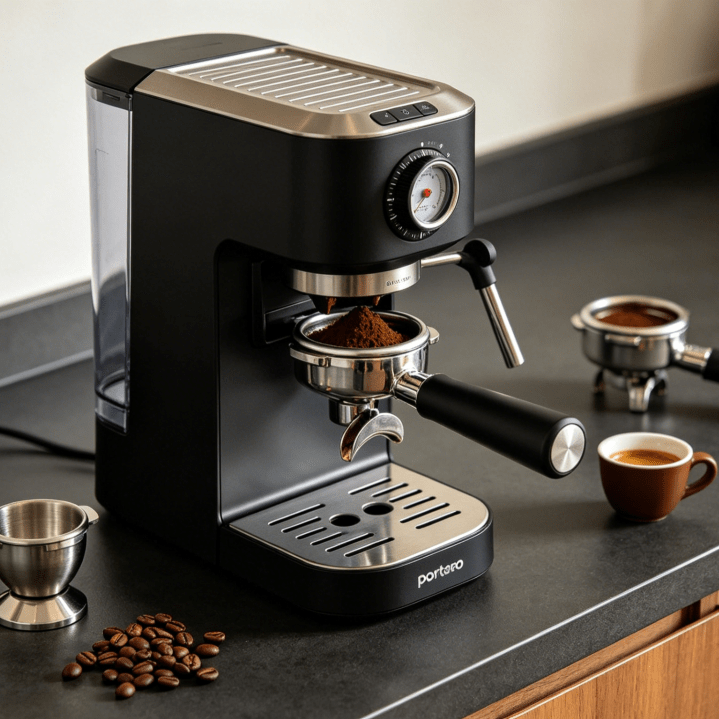
The best electric grinder for espresso is not simply the most powerful grinder or the one with the longest feature list. For home espresso, an electric grinder has to do one difficult job repeatedly: produce fine, consistent grounds with small enough adjustments to control shot time and flavor.
If you are buying your first espresso setup, I would treat the grinder as the foundation. A good machine with a weak grinder will still make frustrating espresso. A modest machine with a capable grinder can teach you much more. That is why this guide focuses on the practical buying decision behind the best electric grinder for your espresso routine, not just a ranked product list.
For specific budget picks, use the best espresso grinder under $300 guide. If you are choosing specifically inside the budget category, the best budget espresso grinder buying guide explains the cheap-versus-affordable tradeoff. This page explains what makes an electric grinder suitable for espresso in the first place.
Quick Answer
| Need | What to Choose | Why |
|---|---|---|
| First home espresso grinder | Espresso-focused electric burr grinder | Enough fine adjustment to learn shot control |
| Breville-style workflow | Timed electric grinder with portafilter cradle | Easy repeatable dosing for daily milk drinks |
| Espresso plus filter coffee | All-purpose conical burr grinder | More flexible, but less direct for espresso-only learning |
| Light roast espresso | Higher-end dedicated espresso grinder | More torque, precision, and adjustment range |
The safest beginner rule: buy an electric burr grinder designed with espresso adjustment in mind. The best electric grinder in this category should make small shot corrections predictable. Do not assume every burr grinder can handle espresso well just because it can grind fine.
Why Electric Burr Grinders Matter for Espresso
Espresso needs a narrow particle-size range and repeatable adjustment. Blade grinders cannot do that. Basic electric burr grinders can be better, but many are designed primarily for drip coffee, not espresso. They may grind fine enough once, but each adjustment step can be too wide to dial in a shot.
A real espresso grinder gives you control. When a shot runs too fast, you can move slightly finer. When it chokes, you can move slightly coarser. That feedback loop is how you learn espresso. Without it, you waste beans and chase random results.
Stepped vs Stepless Adjustment
Most budget electric grinders use stepped adjustment. That means the burr setting moves in clicks. Stepped grinders are easier for beginners because settings are repeatable: you can write down a number and return to it. The weakness is that one click may be too large for perfect espresso dialing.
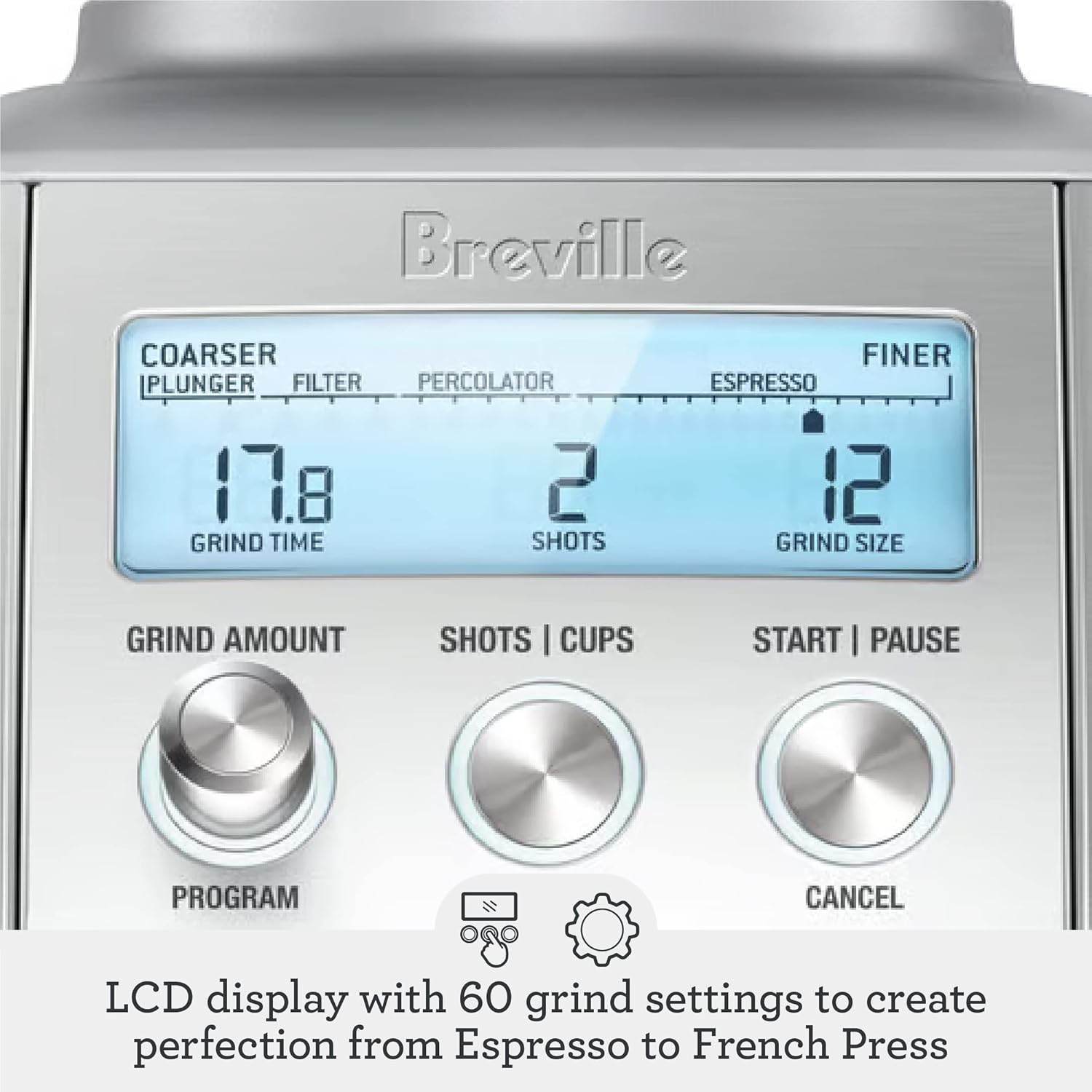
Stepless grinders allow tiny adjustments between settings. They are better for precision but can feel less beginner-friendly because there are no fixed numbers. If you drink straight espresso, switch beans often, or use demanding baskets, stepless adjustment becomes more valuable.
| Adjustment Type | Best For | Tradeoff |
|---|---|---|
| Stepped | Beginners, budget setups, repeatable notes | May be less precise between clicks |
| Stepless | Serious espresso dialing, light roasts, frequent bean changes | Less obvious for new users |
Conical vs Flat Burrs
Conical burr grinders are common in the entry and midrange home espresso market. They can be compact, forgiving, and easier to package in affordable machines. Flat burr grinders are often associated with clarity, speed, and higher-end espresso workflows, though burr quality and grinder design matter more than shape alone.
For a beginner, I would not choose based only on conical versus flat. I would first check whether the grinder has usable espresso adjustment, manageable retention, and a workflow you can live with. A well-designed conical burr grinder can be a better beginner choice than a flat burr grinder that does not fit your routine.
Dosing Workflow: Hopper, Timer, or Single Dose?
Electric grinders usually fall into three home workflows. Hopper-and-timer grinders are convenient when you use the same beans every day. Single-dose grinders are better when you weigh each dose and want less coffee sitting in the hopper. Some budget grinders try to do both, but usually lean toward one style.
- Hopper and timer: convenient for daily milk drinks and shared households.
- Single dose: better for bean switching, freshness, and lower retention habits.
- Portafilter cradle: useful if you want to grind directly into the basket.
- Dosing cup: cleaner if you weigh doses and distribute grounds before tamping.
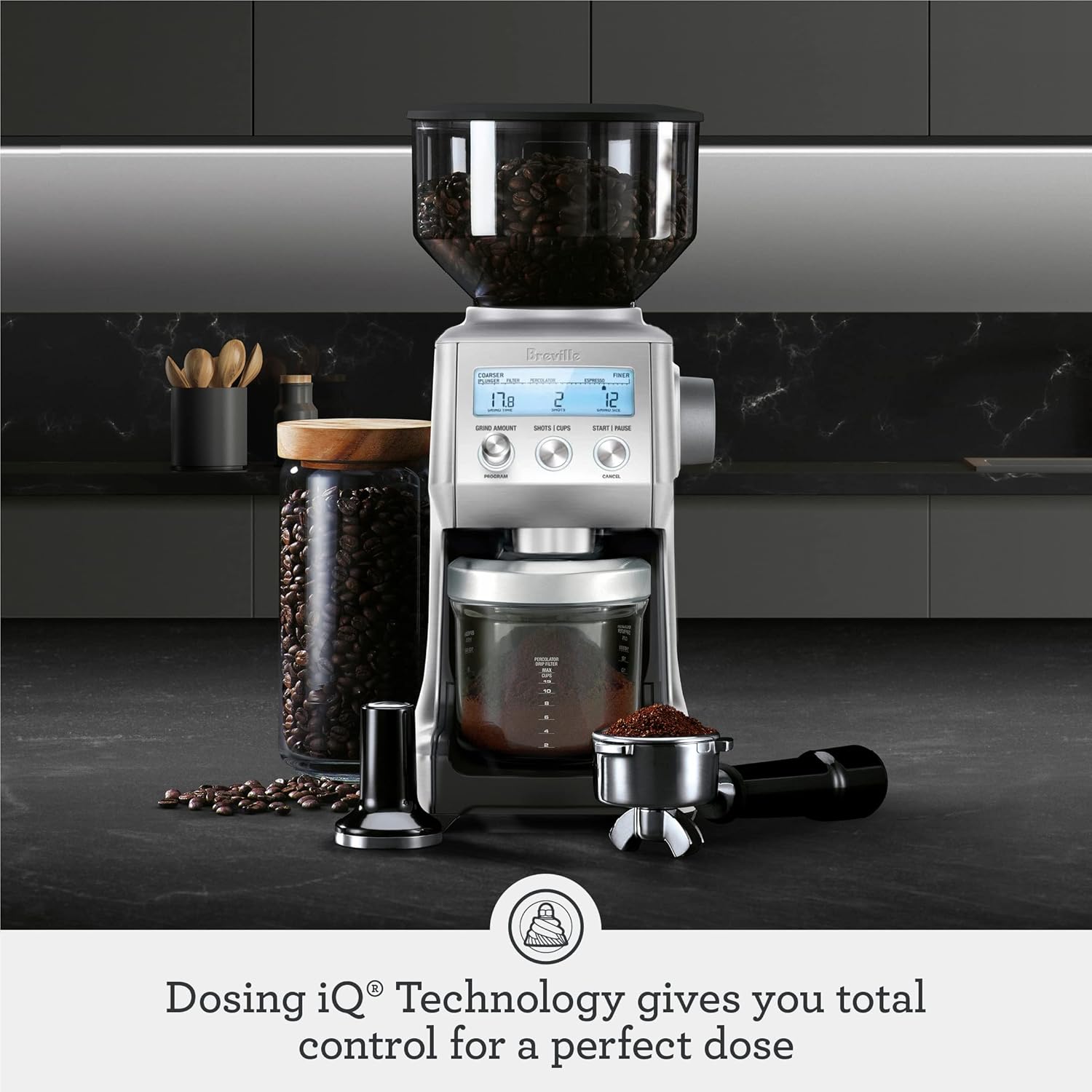
The Breville Smart Grinder Pro is a good example of a convenience-first electric grinder, and Breville’s official Smart Grinder Pro page is useful for checking the current controls and accessory details. Its screen and timed dosing make sense if you want repeatable controls. The full Breville Smart Grinder Pro review covers that workflow in detail.
Retention and Static
Retention is one of the hidden reasons espresso grinders feel inconsistent. If yesterday’s grounds remain in the grinder, today’s first shot may run differently. Static can also make grounds cling to the chute or dosing cup, especially in dry kitchens.
Budget electric grinders usually need small habits to stay consistent: purge a little after big grind changes, brush the chute, and clean the burr path regularly. Some users also use a tiny mist of water on beans before grinding to reduce static. That can help, but it should be done carefully and lightly.
How Much Should You Spend?
For a first electric espresso grinder, the realistic budget depends on your expectations. If you mostly make milk drinks with medium roasts, a good budget grinder can be enough. If you drink straight espresso, use light roasts, and want precise control, spending more on the grinder is usually smarter than spending more on the espresso machine.
| Budget Level | Reasonable Expectation | Risk |
|---|---|---|
| Very low budget | Pressurized baskets or casual espresso | Wide steps and inconsistent dialing |
| Under $300 | Good beginner espresso with the right grinder | Retention, noise, and workflow compromises |
| Midrange dedicated espresso grinder | Better precision and more upgrade room | Higher cost and more technical workflow |
Best Electric Grinder Features to Prioritize
- Espresso-focused adjustment: enough small changes near fine settings.
- Stable burr alignment and motor behavior: consistent grinding under espresso loads.
- Easy cleaning: removable burr access and a clear chute path.
- Workflow fit: dosing cup, portafilter cradle, timer, or single-dose design that matches your routine.
- Parts and support: burrs, hoppers, and basic service should be realistic.
These features matter more than a long list of grind settings. The best electric grinder is not the one with the biggest number on the box; it is the one whose useful espresso range is easy to control. A grinder can advertise many settings and still feel poor for espresso if the useful range is too compressed or the steps are badly spaced.
Common Mistakes
- Buying a grinder built for drip coffee: it may not offer enough espresso control.
- Ignoring the grinder because the machine looks more exciting: espresso quality depends heavily on grind.
- Assuming digital controls mean better coffee: a screen helps workflow, not burr performance.
- Skipping cleaning: retained grounds and oils can make shots taste stale.
- Changing too many variables: adjust grind, dose, or yield one at a time.
Who Should Buy a Separate Electric Grinder?
You should buy a separate electric grinder if you want a setup that can grow. A separate grinder can move from one espresso machine to another. It can also be upgraded independently. That matters because many beginners eventually outgrow the grinder before they outgrow the machine.
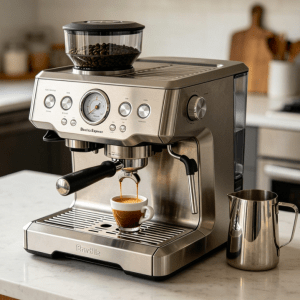
An all-in-one espresso machine is simpler at first, but separate components give you more control later. If you are comparing the Barista Express against separate setups, the Breville Barista Express review explains that tradeoff directly.
Verdict
The best electric grinder for espresso is the one that gives you repeatable fine adjustment, a dosing workflow you can follow, and enough consistency to learn from each shot. For most beginners, that means choosing an espresso-focused electric burr grinder instead of a generic coffee grinder.
If espresso is your main drink, prioritize adjustment and consistency before design or digital features. If convenience matters more, a timed grinder can be a good fit as long as it still offers a useful espresso range. If you want the setup to grow, the best electric grinder is usually a separate grinder that can move with you to the next machine.